
Support Queens Community House
Queens Community House provides individuals and families with the tools to enrich their lives and build healthy, inclusive communities.
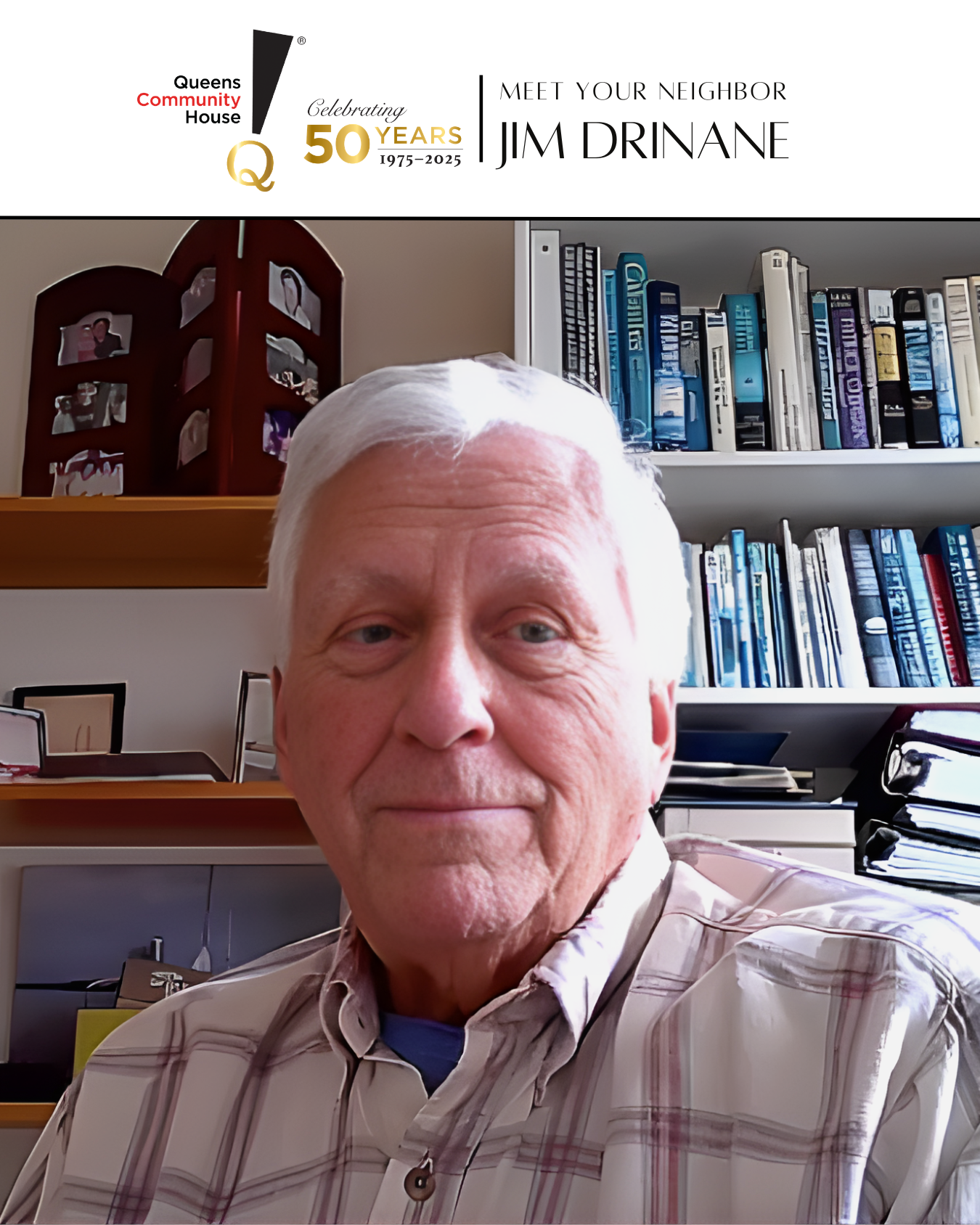
"To understand how I first got connected to the Community House, you have to know what was happening in Forest Hills at the time. The development it was built to serve was at the center of a major conflict that drew national attention. There was a lot of tension, much of it framed around opposition to public housing in what had largely been a Jewish neighborhood.
I was introduced to the project through a former supervisor from Columbia School of Social Work who was working with the American Jewish Committee. They were trying to help the community to move forward, and the Community House was to be a bridge to bring people together.
I became the first Executive Director in 1975, just as NYC was facing a fiscal crisis. Much of the funding we expected disappeared, and we opened with a small staff and a very limited budget.
Still, there was a strong sense of purpose. We wanted the Community House to be a place where everyone felt welcome — families from the development and neighbors from nearby blocks. We focused on programs for kids, supporting families, and helping to stabilize a neighborhood that was going through change.
We opened a childcare center, ran afterschool programs, and worked with residents to organize around housing issues as landlords had begun to disinvest. A senior center operated by Selfhelp Community Services also opened in the building alongside us, creating a space for all generations.
What I remember most is the relationships formed between residents, staff, and community leaders. Even some who had initially opposed the development became part of the effort to make it succeed.
The early years were not easy. Our biggest challenge was staying afloat. But it was also an exciting time. We were building something from the ground up.
After 3 years, I moved to the New York City Housing Authority, where I spent the next 20+ years but stayed connected and hopefully helpful to the Community House in its early growth.
Looking at it today, I'm struck by the Community House's expansion. We were just trying to build something that could last. Seeing what it's become is remarkable.
Even now, I keep a plaque from those early days above my desk. It reminds me of what we started and how far it has come."
—Jim Drinane